One of the most persistent myths among date buyers is the belief that cheap dates must be low quality. In reality, a low price is often simply a reflection of an abundantly produced variety, not a sign of poor quality. Egyptian and Iraqi dates, for example, sell from around Rp20,000-45,000 per kilogram not because they are defective, but because supply is large and harvesting costs are low. Conversely, there are "mid-priced" dates whose quality has actually collapsed due to poor storage or added sweeteners. This article helps you shop smart: getting a budget price without falling for genuinely low-grade dates.
Cheap Does Not Mean Low-Grade: Why Prices Drop
Before judging quality, it helps to understand why a date might be inexpensive. There are at least four legitimate reasons that have nothing to do with quality:
- High harvest volume. Egypt is the world's largest date producer at 1.87 million tonnes in 2023 (about 17.48% of global output). Abundant supply naturally pushes prices down.
- Dry or semi-dry texture. Dry dates such as Zahedi or Sayer last longer and cost less to handle, making them cheaper than premium soft dates.
- Smaller size. Small fruit is not less nutritious; sugar content per gram is comparable, the fruit simply looks less impressive.
- Bulk buying. Purchasing by the 5-10 kg carton lowers the per-kilogram price substantially.
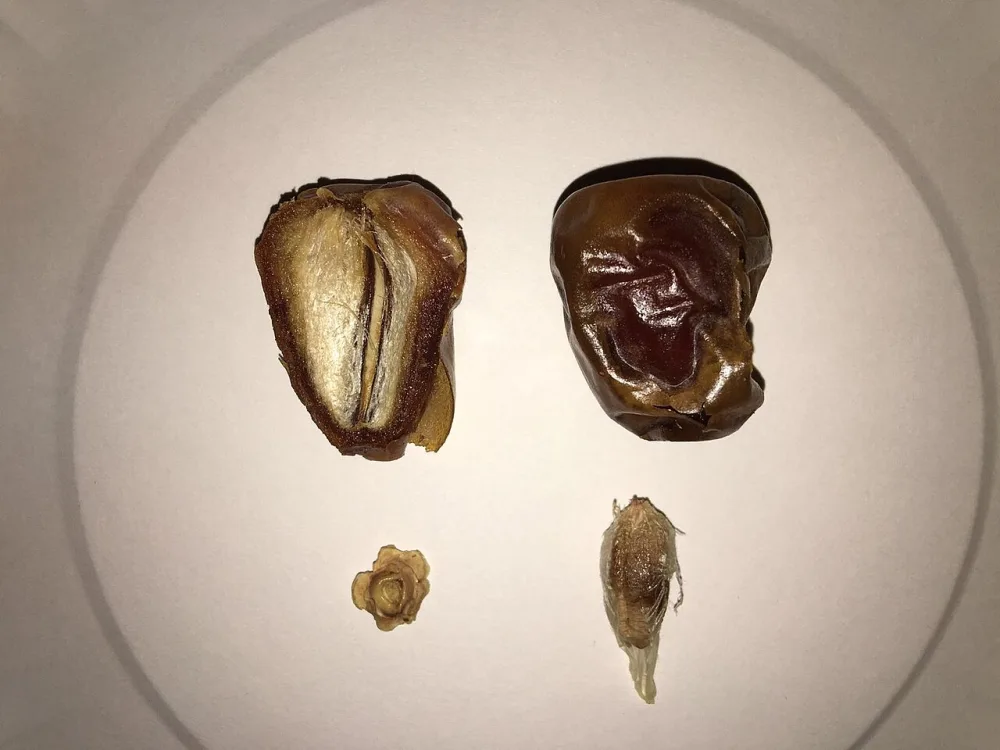
What truly makes a date low-grade is something else: added sugar to mask flavour, glucose syrup to add shine, damp storage that breeds mould, or mixing spoiled fruit into the sack. These are what you need to detect, and fortunately all of them can be spotted without special tools.
8 Ways to Confirm Budget Dates Are Still Good
1. Run the "Ant Test"
This is a classic market-trader trick. Place a few dates on an open plate at room temperature for a few hours. Naturally sweet dates do not attract ants excessively. If ants swarm heavily in a short time, the surface may have been coated with added sugar syrup. It is not lab proof, but it works as a free, easy first filter you can do at home.
2. Read the Ingredient Label
For packaged dates, the label is the budget shopper's best friend. Authentic dates ideally list a single ingredient: dates. Be wary of "glucose syrup", "sugar", "humectant", or "preservative". Adding sugar is not only a health issue but also a trick to raise the perceived flavour of low-grade fruit so it still sells. For unlabelled loose dates, ask the seller directly about the variety and country of origin; an honest trader will answer with confidence.
3. Watch the Surface Sheen
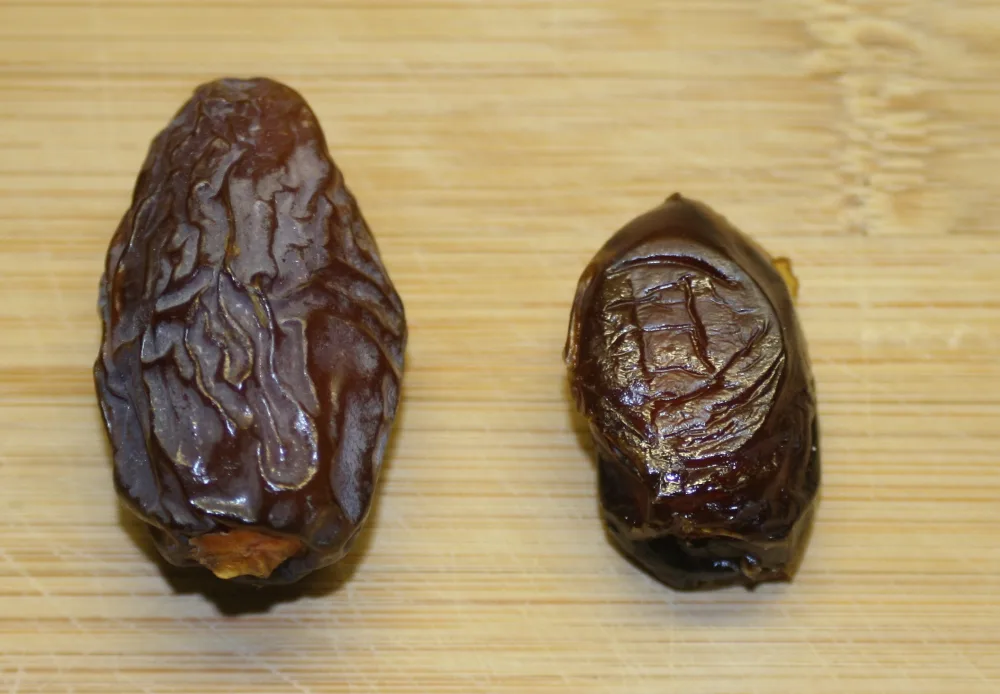
Natural dates are slightly glossy from their fruit sugar, but an excessive, uniform shine that looks syrup-coated is suspicious. A layer of oil or glucose syrup is often used to disguise dull, dry dates as fresh and "premium". Compare a few piles: dates that are uniformly wet-shiny are usually not naturally so.
4. Check Texture with a Gentle Squeeze
Lightly press one fruit. Quality dates feel chewy and fleshy, neither rock-hard (a sign of long, dry storage) nor unnaturally watery-soft (a sign of fermentation or liquid sweetener). For cheap dry dates, a little firmness is normal as long as they do not crumble to dust when pressed. Soft dates such as Mazafati are meant to be soft but still hold their shape rather than turning slimy.
5. Inspect Colour and Uniformity
Choose dates with a reasonably even colour for the variety: Egyptian tends toward yellowish-brown, Sukari golden-brown, Mazafati very dark brown. Extreme blotching, uneven whitish patches (possibly mould rather than natural sugar crystals), or overly wrinkled surfaces point to poor storage. Uniformity of fruit within a single pack also signals good sorting.
6. Smell the Aroma
Healthy dates smell of light sweet caramel. A sour, alcoholic, or musty smell indicates fermentation or age. A sharp chemical odour is also a danger sign. The nose is often more honest than the eyes, so do not hesitate to bring the date close before buying in quantity.
7. Look for Insects or Tiny Holes
Carelessly stored dates are prone to moths or weevils. Check for small holes in the flesh, fine webbing, or powder at the bottom of the pack. This is not about cheap versus expensive but about the seller's warehouse management. Buying from an importer with fast stock rotation (FIFO, first in first out) measurably lowers this risk.
8. Buy a Small Sample Before Bulk
The thriftiest and safest strategy: buy 250-500 grams first to assess taste, texture, and freshness before committing to 5-10 kg. An honest seller who is confident in their quality will not object to a trial purchase. Think of it as a small "insurance cost" before a big buy so you have no regrets.
Red-Flag Table: Signs of Low-Grade Dates to Avoid
Use the following table as a quick checklist while shopping, whether at a traditional market or an online store:
| Aspect | Quality Budget Dates | Low-Grade Dates (Avoid) |
|---|---|---|
| Ingredient label | 100% dates, single ingredient | Added sugar, glucose syrup, preservative |
| Surface sheen | Light natural gloss | Very shiny, syrup-coated look |
| Texture | Chewy/fleshy or reasonably dry | Unnaturally watery or rock-hard |
| Aroma | Light sweet caramel | Sour, alcoholic, musty, or chemical |
| Colour | Even for the variety | Blotchy, whitish mould patches |
| Ant test | Mildly attracts ants | Swarmed very quickly |
| Packaging | Clean, dry, sealed | Powder, holes, or insect webbing |
| Price vs variety | Cheap because variety is economical | Too cheap for a premium variety (suspect blend) |
An important note on the last row: if someone offers "premium" dates such as Ajwa or Medjool far below market price, that is precisely when to be suspicious of a blend or imitation. Reasonable cheapness applies to varieties that are genuinely economical, not to expensive varieties whose price is suddenly slashed.
Shopping Smart Without Sacrificing Quality
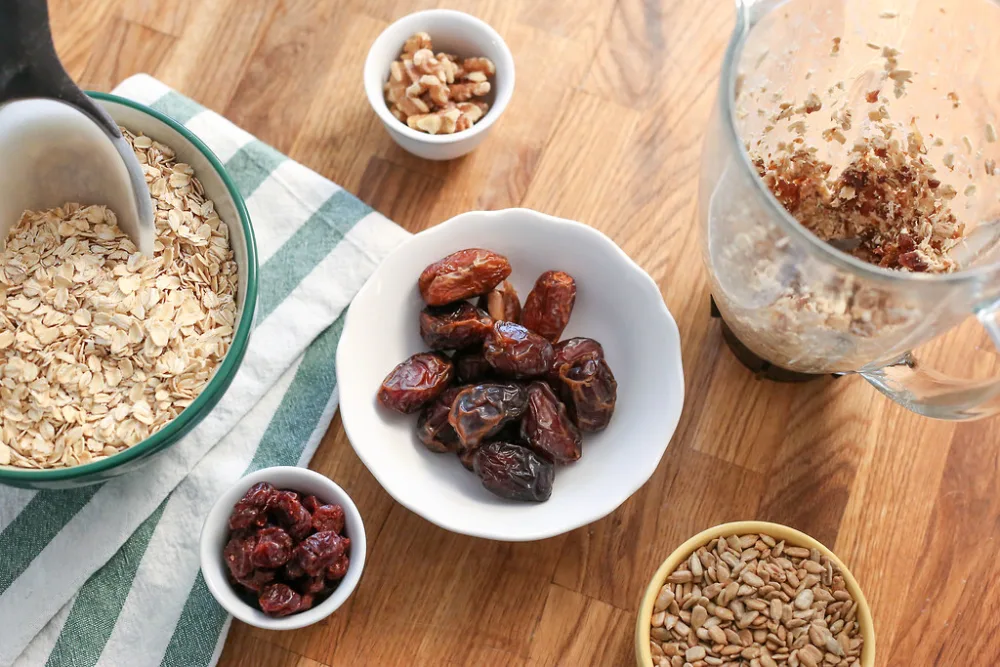
The key is not to avoid cheap dates but to choose varieties that are naturally affordable and then screen their quality with the eight checks above. Egyptian, Tunisian, Lulu, or Zahedi dates can all be economical choices that remain perfectly suitable for daily iftar or family stock. For large purchases, order by the carton from an importer that sells directly with few middlemen, so prices stay friendly.
Readers who want to understand the full price spectrum can consult our guide to the cheapest dates per kilogram and our Mixed Kilo Pack of five varieties, which combines several affordable varieties in a single purchase. That way you can sample many options while keeping to a budget and learning the character of each date.
Closing Note
The information in this article is educational to support buying decisions and is not medical advice. For specific dietary needs, such as blood-sugar management, consult a healthcare professional. What is certain is that with a little care you can enjoy quality dates at a genuinely thrifty price: cheap, but not low-grade at all.